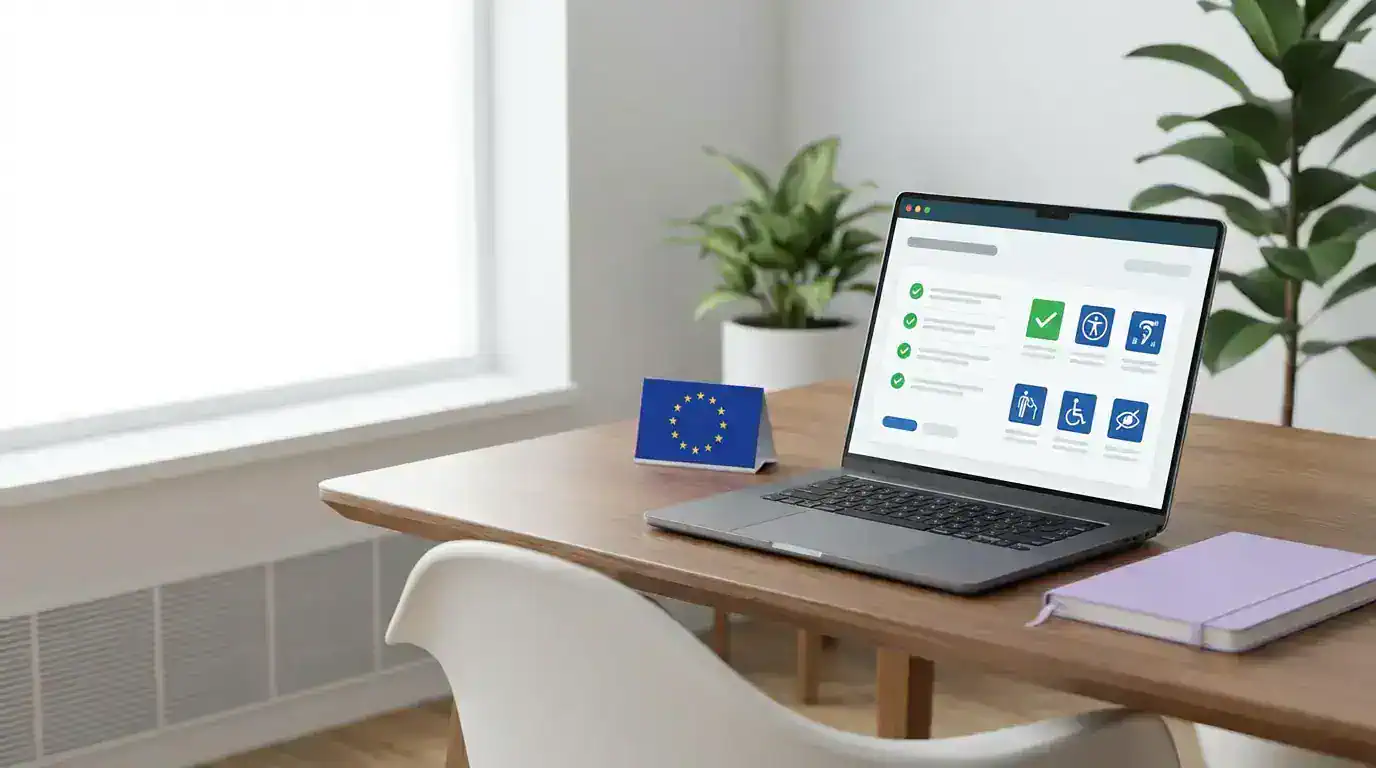
If you do business in Europe, the conversation around website accessibility has changed.
The European Accessibility Act (EAA) is no longer a future deadline. The rules are now in effect. The goal is simple: ensure that everyone, regardless of physical or cognitive ability, can access essential digital services.
For many SMEs, this is a good moment to check whether your website is as welcoming and professional as it should be. Accessibility is quickly becoming a baseline expectation, not a “nice to have.”
Who is affected by these rules?
The EAA covers a broad range of digital products and services, with a strong focus on areas like e-commerce, banking, and communication services.
Microenterprises with fewer than ten employees may have specific exemptions. Even so, accessibility is increasingly expected across the board.
Here is the key business reality: even if your business is not strictly required to comply, your clients and partners might be. Larger organizations are already asking vendors to meet accessibility standards so they can protect their own compliance. An accessible website makes your business easier to work with and helps you stay competitive.
The benefits of staying current
Accessibility is not only about avoiding legal risk. It is also a quality signal.
A conformant website typically brings:
- A better user experience
Accessible sites are logically structured and easier to navigate for everyone. - Wider market reach
You remove barriers for the millions of people in the EU who have accessibility needs. - Stronger brand reputation
A site that meets modern standards shows you value every visitor’s experience.
If you are already improving your site for performance and growth, accessibility fits naturally into that conversation. Our post on when to update your website and what to update first can help you decide where to begin.
How to stay conformant without becoming a technical expert
You do not need to become a specialist to handle accessibility requirements. The best approach is to treat accessibility as part of standard website care.
The simplest path is working with a web partner who understands the requirements and can build accessibility into your ongoing site management.
At Lavender Giraffe, we design and support websites with inclusion in mind. If accessibility is relevant to your business, our accessible websites service explains what we do and how we approach compliance across different regions.
Ongoing WordPress maintenance also helps, because accessibility improvements often go hand-in-hand with keeping themes, plugins, and site structure up to date.
Moving forward with confidence
Accessibility is here to stay, and it is making the internet better for everyone.
By embracing accessibility standards now, you reduce future risk and show customers that you take their experience seriously.
If you are unsure whether your current website meets today’s EU expectations, the first step is a clear, practical review of your site and its content.